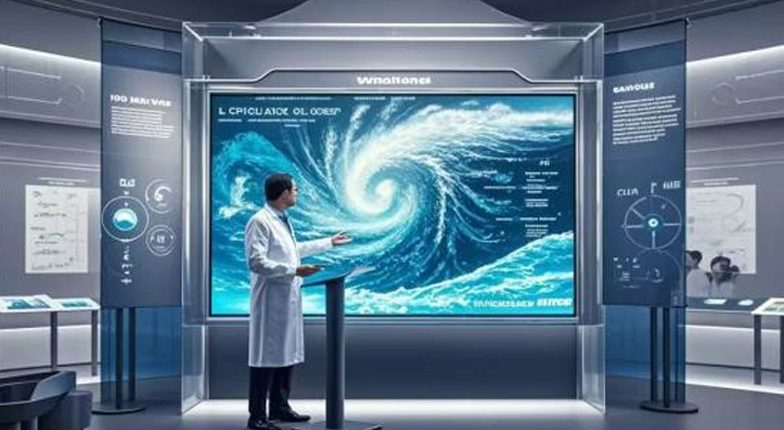
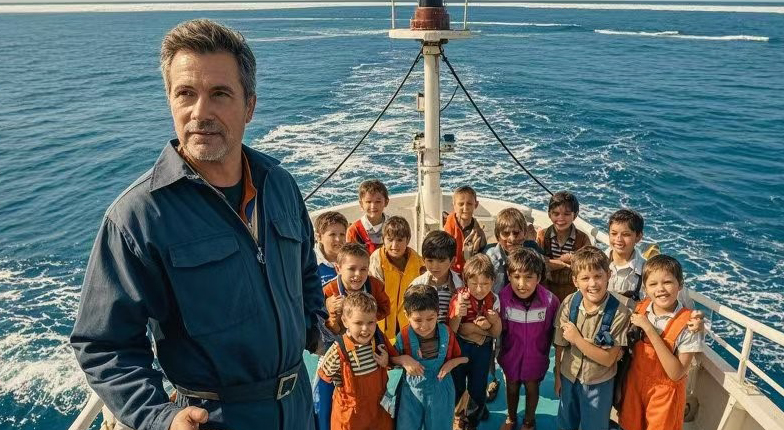
The “AI-Driven Deep” is a comprehensive popular science course themed on AI + Marine Scientific Research. Centered on the core concepts of Understanding the Ocean, Exploring the Deep Sea, Empowering Technology, and Facing the Future, it systematically integrates six modules: Introduction to Ocean and Scientific Expedition, Exploring Deep-Sea Equipment, Deep-Sea Life and Environment, Marine Resources and Sustainable Development, China's Deep-Sea Exploration and Global Cooperation, and Global Circumnavigation Expedition. Based on cutting-edge scientific developments, the course deeply integrates next-generation technologies such as artificial intelligence, digital twins, and the marine Internet of Things with traditional marine scientific research. It explains core knowledge of deep-sea detection, abyssal exploration, ocean observation, and ecological protection in an accessible manner, balancing scientific rigor, practicality, and engagement.
The course not only helps learners understand the vital value of the ocean and grasp engineering and scientific breakthroughs in deep-sea exploration, but also conveys concepts of marine ecological protection, sustainable resource utilization, and global scientific research cooperation. It supports learners in building a complete cognitive framework of marine science, experience the future vision of a transparent ocean empowered by technology, and inspire interest in marine exploration and scientific practice.
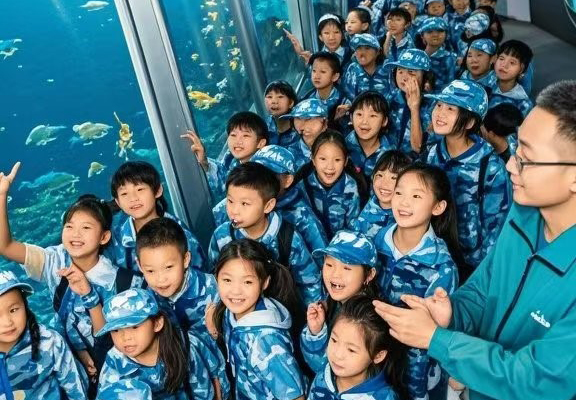
Part 1: Introduction to Ocean and Scientific Expedition
Core Focus
Foundation + Diver’s Perspective
Key Content
1. Basic knowledge of marine geography, including ocean distribution, topographic features, hydrological conditions, and other fundamentals.
2. The history and significance of marine scientific research, with classic domestic and international expedition case studies.
3. Applications of diving technology in marine research, with first-hand experiences shared from a diver’s perspective.
4. Basic methods and tools for ocean observation, laying a foundation for subsequent learning.
Part 2: Exploring Deep-Sea Equipment
Core Focus
Technical Capability and Engineering Practice
Key Content
1. Classification of deep-sea exploration equipment, including manned submersibles, unmanned submersibles, underwater robots, and more.
2. Analysis of working principles and technical parameters of various equipment to clarify technical challenges in deep-sea detection.
3. Engineering practice cases of equipment development and maintenance, highlighting challenges and breakthroughs in technological innovation.
4. Applications of AI in deep-sea equipment, such as intelligent control, data collection, and analysis.
Part 3: Deep-Sea Life and Environment
Core Focus
Scientific Discovery, Biodiversity and Ecological Responsibility
Key Content
1. Analysis of deep-sea environmental characteristics, including extreme conditions such as high pressure, low temperature, and darkness.
2. Research on deep-sea biodiversity, introducing unique deep-sea organisms and their adaptive traits.
3. Structure and function of deep-sea ecosystems to understand the importance of marine ecological balance.
4. Impacts of human activities on the deep-sea environment and conservation strategies, fostering awareness of ecological responsibility.
Part 4: Marine Resources and Sustainable Development
Core Focus
Resource Utilization and Ethical Balance
Key Content
1. Classification of marine resources, including biological resources, mineral resources, energy resources, space resources, and others.
2. Current status and technologies of marine resource development and utilization, analyzing advantages and challenges.
3. Ethical balance between resource utilization and environmental protection, exploring core principles of sustainable development.
4. Policies and regulations for marine resource management, understanding the basic framework of global resource governance.
Part 5: China's Deep-Sea Exploration and Global Cooperation
Core Focus
National Achievements, Strategic Layout and Future Vision
Key Content
1. howcase of major achievements in China’s deep-sea exploration, including projects such as Jiaolong, Shenhai Yongshi, and Fendouzhe.
2. China’s strategic layout for marine science and technology development, including research platform construction, talent training, and technological innovation.
3. Introduction to international mechanisms for marine exploration cooperation, analyzing the importance of global ocean governance.
4. Forecast of future trends in marine science and technology, with a vision for exploration enabled by AI.
Part 6: Global Circumnavigation Expedition
Core Focus
Historical Heritage and Expedition Spirit
Key Content
1. Review of the history of global circumnavigation expeditions, featuring classic voyages such as Zheng He’s Voyages and Darwin’s Voyage on HMS Beagle.
2. Organization and implementation of modern global expeditions, covering preparation and execution of research projects.
3. Professional qualities and spiritual traits of expedition members, conveying the scientific spirit of courage and perseverance.
4. Contributions of global expeditions to human knowledge, inspiring learners’ passion for scientific exploration.
| Part 1 |
Introduction to Ocean and Scientific Expedition |
Blue Planet: Why Oceans Matter |
| Marine Scientific Expedition: From Curiosity to Science |
| Uncle Diver: Warriors and Scientists Under the Sea |
| Part 2 |
Exploring Deep-Sea Equipment |
Research Vessels: Floating Laboratories at Sea |
| Submersibles: Breaking Through the Abyss |
| Seafloor Exploration: Acoustic and Remote Sensing Technologies |
| Part 3 |
Deep-Sea Life and Environment |
Hydrothermal Vents and Dark Ecosystems |
| Deep-Sea Biodiversity |
| Marine Environmental Change and Monitoring |
| Part 4 |
Marine Resources and Sustainable Development |
Deep-Sea Resources: Minerals and Energy |
| Blue Economy: Marine Medicine and Carbon Neutrality |
| Marine Environmental Change and Monitoring |
| Part 5 |
China's Deep-Sea Exploration and Global Cooperation |
China's Marine Scientific Expedition: From Coastal Waters to Polar Regions |
| Future Ocean: Transparent Ocean and Digital Twin |
| Pioneer of China's Global Scientific Expedition |
| Part 6 |
Global Circumnavigation Expedition |
Depicting Your Marine Expedition with AI |
| China's Global Scientific Expedition |
| Marine Environmental Change and Monitoring |